Maya's Moon Diary
Maya draws the moon every night for a month and discovers why it seems to change shape.
Maya's teacher gave the class a month-long challenge: look at the moon every night it was clear, and draw what you see.
The first night, Maya couldn't find the moon at all. "It's gone," she told her dad.
"Not gone," said Dad. "Write down that it's a new moon. We just can't see it right now."
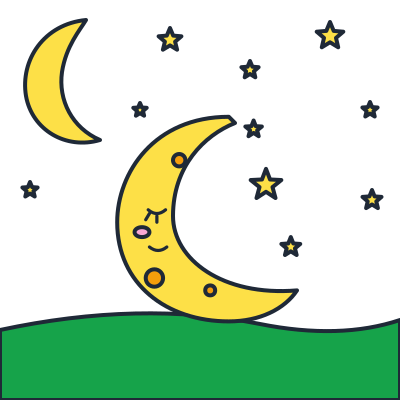
A few evenings later, just after sunset, Maya spotted a thin silver curve low in the west. She drew it carefully: a smile-shaped sliver, lit up on the right side.
Each clear night, the bright part grew fatter. By the end of the first week, the moon looked like half a circle. "A half moon," Maya wrote. Dad told her its proper name: the first quarter moon.
"But why is it called a quarter if it looks like half?" asked Maya.
"Because the moon has gone a quarter of the way around the Earth," said Dad. "Good question, though."
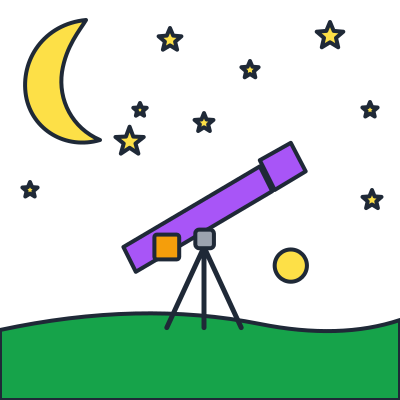
Two weeks after the new moon, Maya stayed up a bit late. There it was, rising behind the houses: a huge, round, glowing full moon. She looked at it through Grandpa's old telescope and could see dark gray patches and tiny round craters.
"Grandpa, where does the moon's light come from?" she asked. "Does it have a light inside?"
"No light inside," said Grandpa. "The moon is a big, rocky ball. The sun shines on it, and the moon reflects that light, like a mirror reflects a flashlight."
Maya thought about that. "So it's always half lit up, by the sun. We just see different amounts of the lit-up half?"
Grandpa looked impressed. "Exactly. As the moon travels around the Earth, we see more and more of the sunny side, then less and less."
After the full moon, the bright part shrank, night after night. The moon rose later and later, too. For a while, Maya could only find it in the morning sky before school, pale and white.
There was a rainy patch for four nights, and Maya was worried her diary would have holes. "Scientists deal with cloudy nights too," said Dad. "Just write cloudy, and carry on."
Finally, almost a month after she started, the moon disappeared again. A new moon.
Maya laid all her drawings out on the floor in a long line: nothing, then a sliver, a half, a full round circle, a half the other way, a sliver, and nothing again.
"It's like the moon is breathing," said her little brother.
Maya laughed. At school, she pinned her diary to the board with a title in her neatest writing: The Moon Never Changes Shape. We Just See It Differently.
⭐ The End ⭐
💬 Talk about it
- What is it called when we can't see the moon?
Show answer
A new moon. - Where does the moon's light come from?
Show answer
It reflects light from the sun. - How long after the new moon was the full moon?
Show answer
About two weeks. - What did Dad say scientists do on cloudy nights?
Show answer
Write cloudy and carry on.